More than a number on the clock
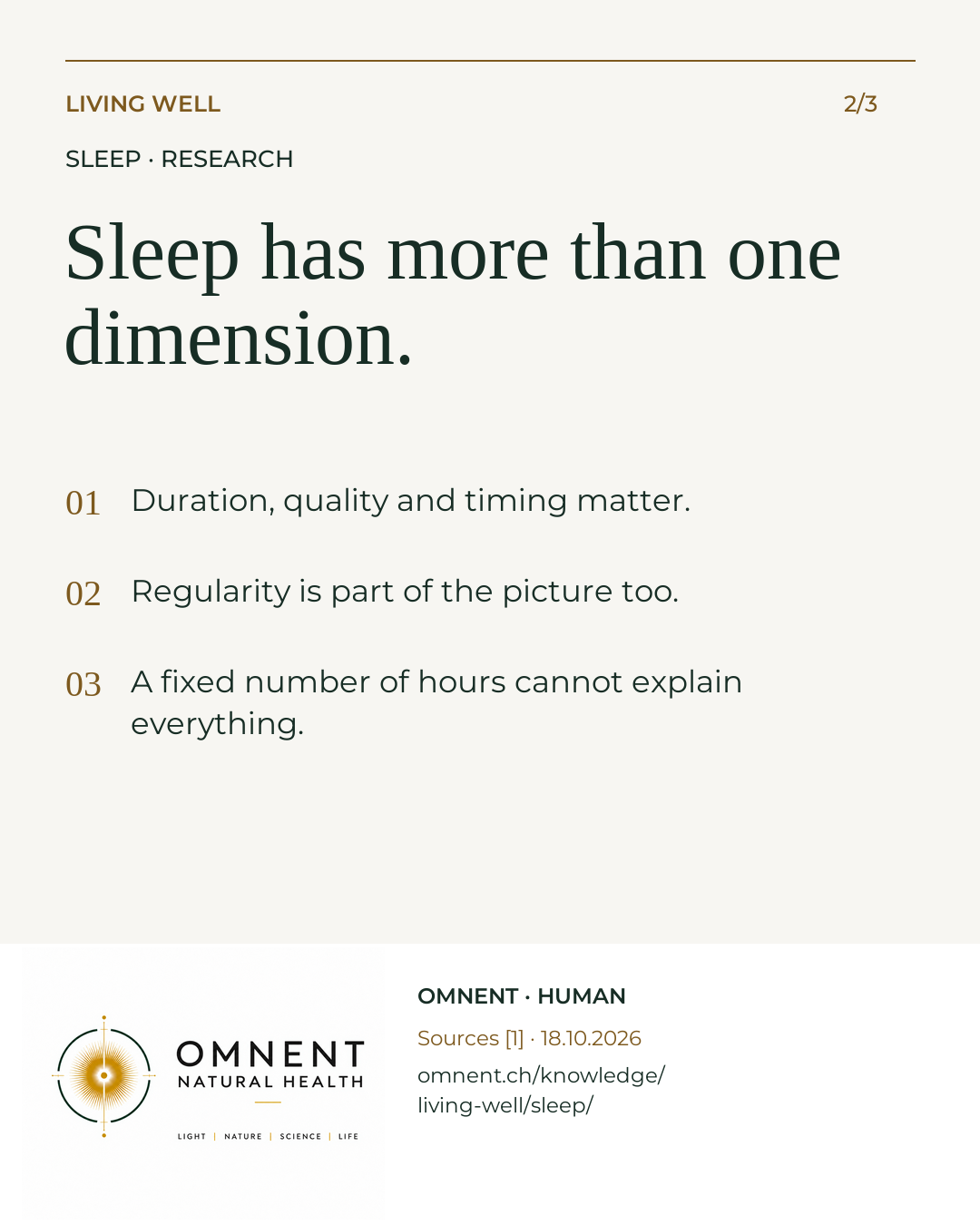
Healthy sleep involves sufficient duration, suitable timing, regularity and quality. The AASM/SRS recommendation guides adults aged 18–60; it is not an individual test with a precise pass mark. [1]
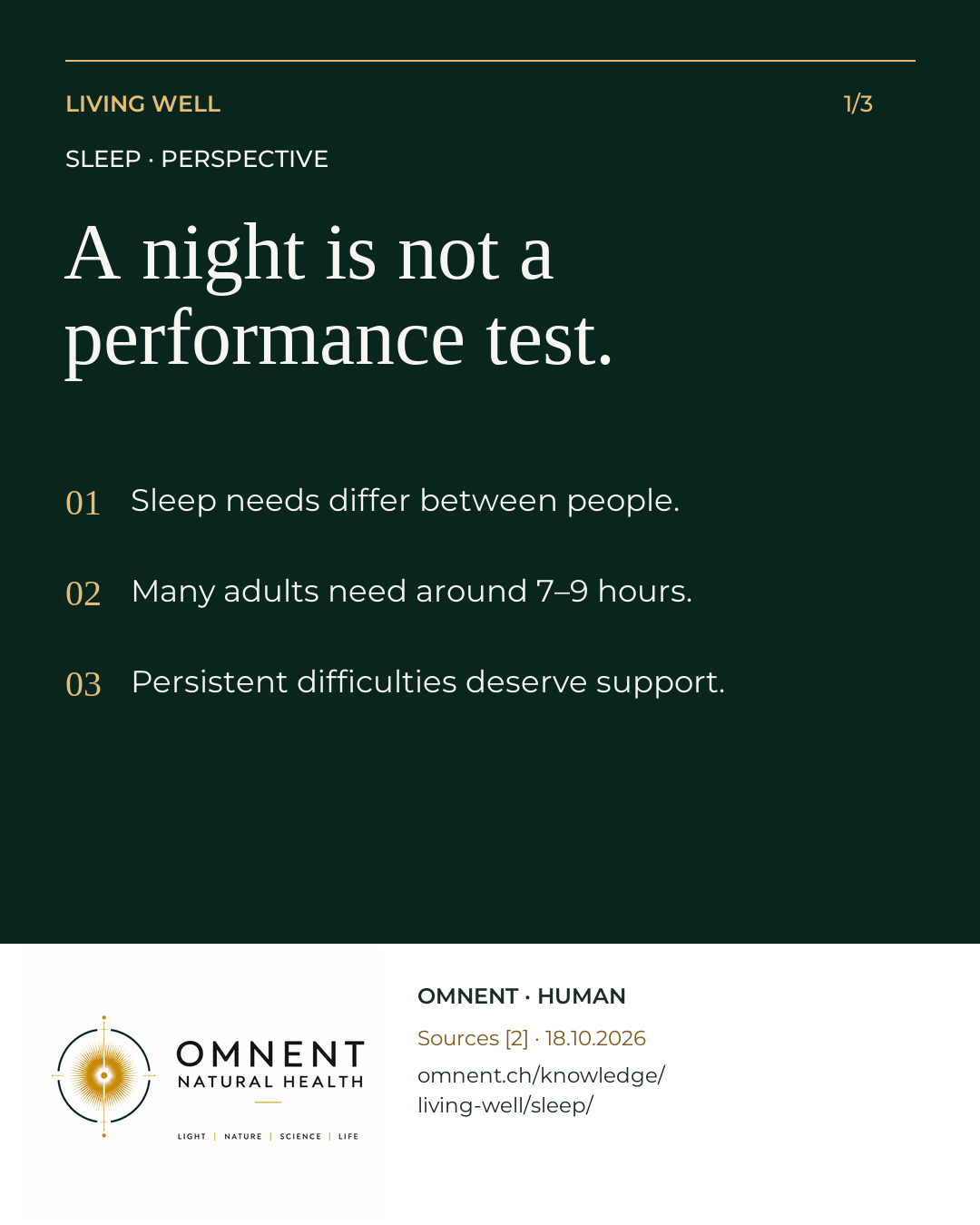
The NHS gives an average of seven to nine hours for adults, while recognising that individual needs differ. [2]
Separate three questions: Do I have enough opportunity to sleep? Can I sleep when it is available? How am I managing the following day? Someone working long hours or caring for a relative needs a different conversation from someone who spends enough time in bed but remains awake.
The hours between getting into bed and the alarm include time awake. A single unsettled night is also a poor verdict on sleep as a whole. Look at the pattern and what you can change or discuss with a professional.
A rhythm that fits real life
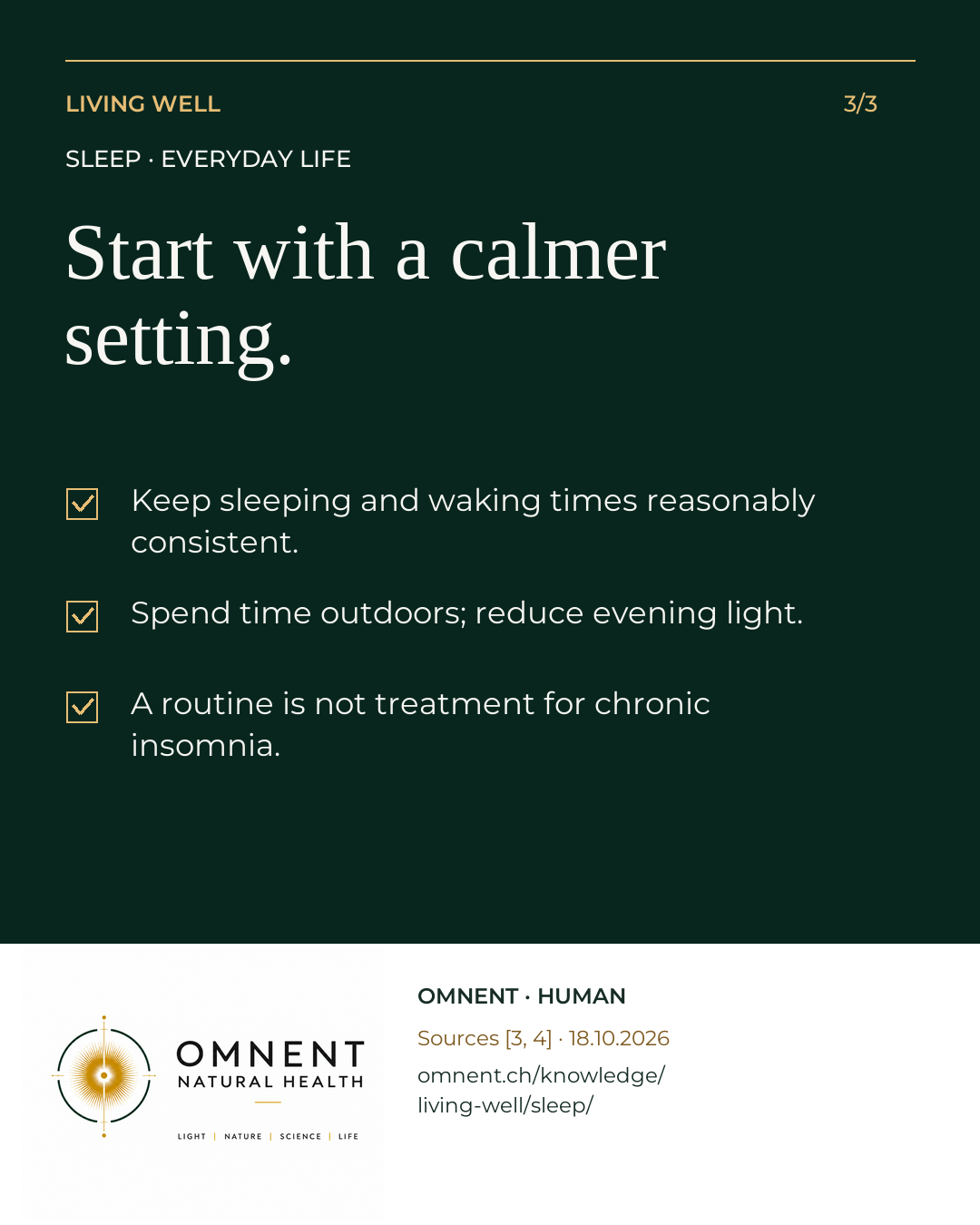
NHLBI guidance recommends reasonably consistent sleeping and waking times, time outdoors and activity, and a quiet, dark, relatively cool bedroom. The period before bed can also be less brightly lit and stimulating. [3]
Start with a realistic waking window. Then identify which evening commitment repeatedly crowds out sleep: a final round of work, perhaps, or household tasks. Look for a negotiable point in the day rather than adding another list of perfect bedtime rituals.
Shift work, caring responsibilities and young children can make a consistent schedule difficult. Plan around those constraints. A conversation about shifts, childcare or practical support may be more useful in your situation than trying to maintain an ideal routine through individual effort alone.
60,977 UK Biobank participants; roughly one week of movement-sensor measurements and an average 6.3 years of follow-up.
Regularity: an association, not a lifespan promise
Finding. More regular sleep was associated with lower mortality.
Interpretation & limitations. Observation does not establish causation. Health, work and social circumstances may contribute; the predominantly white, older sample limits generalisation. The finding cannot predict extra years of life for an individual.
Original source [8] ↗Caffeine and light: dose and timing matter
Choose a specific question: How late is my last caffeinated coffee? Or why does my screen stay on until I try to sleep? Note the situation before creating a rule. For coffee, serving size and preparation belong alongside the time of day.
The experiments below help explain why simply saying «I do not notice it» provides limited reassurance. They do not supply a universal personal cut-off. A small experiment in selected healthy volunteers cannot represent every age group or every situation outside the laboratory.
Double-blind crossover trial in 23 young men: placebo, 100 or 400 mg caffeine, taken 12, 8 or 4 hours before bedtime.
Caffeine: a large single dose can last
Finding. 400 mg altered sleep measures even when taken earlier; disruption increased nearer bedtime. No significant effect was detected with 100 mg.
Interpretation & limitations. Small, exclusively male sample. This does not make evening 100 mg harmless for everyone; 400 mg was an experimental dose, not a recommendation.
Original source [6] ↗Twelve young adults read for four hours on each of five evenings using either a light-emitting reader or a printed book in a crossover experiment.
Bright screens: an intensive laboratory experiment
Finding. The device delayed sleep onset and circadian timing and reduced morning alertness.
Interpretation & limitations. A small, tightly controlled experiment with prolonged exposure. It does not quantify every brief phone interaction or establish the benefit of a particular screen filter.
Original source [7] ↗When sleep hygiene is not enough
The European guideline recommends CBT-I first for chronic insomnia, including in older adults and people with accompanying conditions. Delivery can be in person or digital. Assessment considers sleep and medical history. [4]
When considering a service, ask whether it provides insomnia treatment and who oversees it. A collection of relaxation tips is not automatically CBT-I. Take your main questions to an appointment: What might be maintaining the difficulty? Which treatment fits? How will we assess progress together?
This article does not instruct you to restrict sleep independently or recommend a medicine or food supplement as treatment. Naming an ingredient does not explain why someone is sleeping poorly. Changes to prescribed medication belong in a conversation with the treating professional.
Meta-analysis of 20 randomised trials involving 1,162 adults; face-to-face, multicomponent CBT-I versus inactive controls.
CBT-I: less time awake, not simply more hours
Finding. After treatment, sleep onset was about 19 minutes faster and wakefulness during the night about 26 minutes shorter on average. The increase in total sleep time was not statistically clear.
Interpretation & limitations. Diary outcomes and narrowly selected populations; insomnia with relevant accompanying conditions was excluded. Group averages cannot predict an individual treatment result.
Original source [5] ↗Observe without grading the night
If you would like to keep notes, keep them brief: approximate sleeping and waking times, noticeable periods awake, and how you felt during the day. Add only events relevant to your question. A late meeting, a changed shift or pain may be more informative than a long list of suspected causes.
Treat notes as a basis for discussion rather than a daily test. A difficult Wednesday does not disprove a sensible change; a good Thursday does not establish an effect. Altering several things at once makes it hard to tell which, if any, mattered.
For an everyday adjustment, choose one manageable step and record whether it is feasible. You do not need expensive equipment or a perfect score to describe your experience clearly. When symptoms persist, a professional assessment matters more than an increasingly elaborate private analysis.
When to seek support
Seek medical advice when problems persist for months, changes in habits have not helped, or daily life is significantly affected. Do not drive when sleepy. [2]
Loud snoring with witnessed breathing pauses, gasping or daytime sleepiness can indicate sleep apnoea. These signs require assessment, not a judgement based solely on hours slept. [9]
Prepare specific examples for the conversation: When did the difficulty start? What do others notice at night? In which daily situations does tiredness become a problem? Bring your medication list too. This turns «I sleep badly» into a description that can support a focused assessment.
A CLOSER LOOK
Is that really true?
Everyone must sleep exactly eight hours.+
Too rigid.
The consensus provides guidance while recognising individual needs, not a universal eight-hour requirement. [1]
Following every sleep rule removes the need for treatment.+
It is not that simple.
Structured CBT-I is central to the guideline for chronic insomnia. Good intentions do not replace that treatment. [4]
START SMALL
A manageable beginning
- 01
Choose one question: insufficient opportunity, lying awake, or difficulties during the day. Write down a specific example.
- 02
Consider one feasible everyday change, such as a quieter evening window. Plan it around work and caring responsibilities.
- 03
After several days, review what was manageable and what remained difficult. If symptoms persist, these notes can help start a conversation.