More than a number on the scales
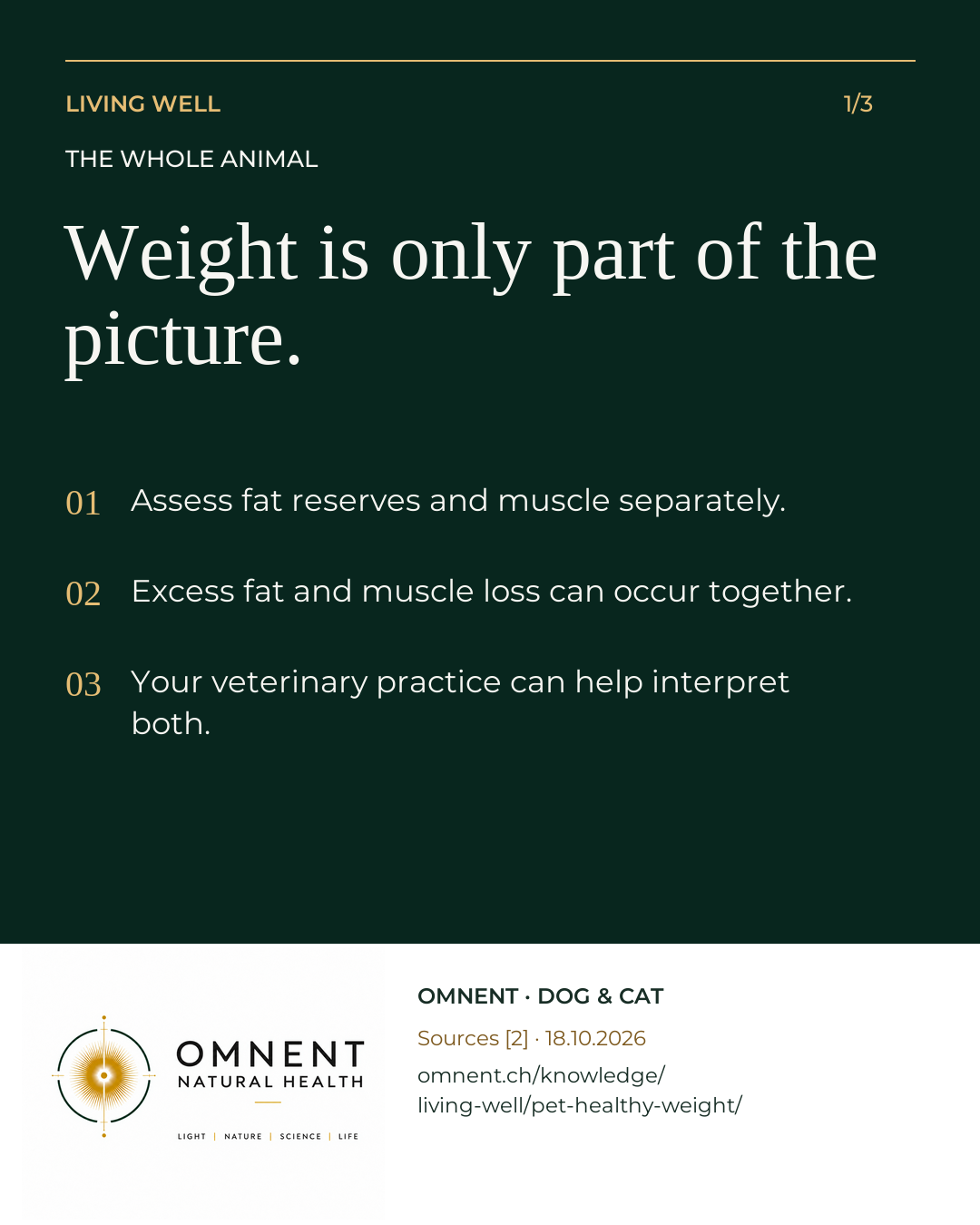
WSAVA distinguishes Body Condition Score, assessing fat reserves, from Muscle Condition Score, assessing muscle. Excess body fat and muscle loss can coexist. Assessment involves looking and feeling; a human BMI or a photograph alone cannot replace it. [2]
Ask the practice to demonstrate both assessments. [2]
Bring a specific observation to the conversation: “He stops earlier on our usual walk.” This is more useful than a judgement such as “too lazy”. Describe what changed without attributing an intention to your pet. Your own uncertainty can be part of that conversation too.
Make the whole feeding picture visible
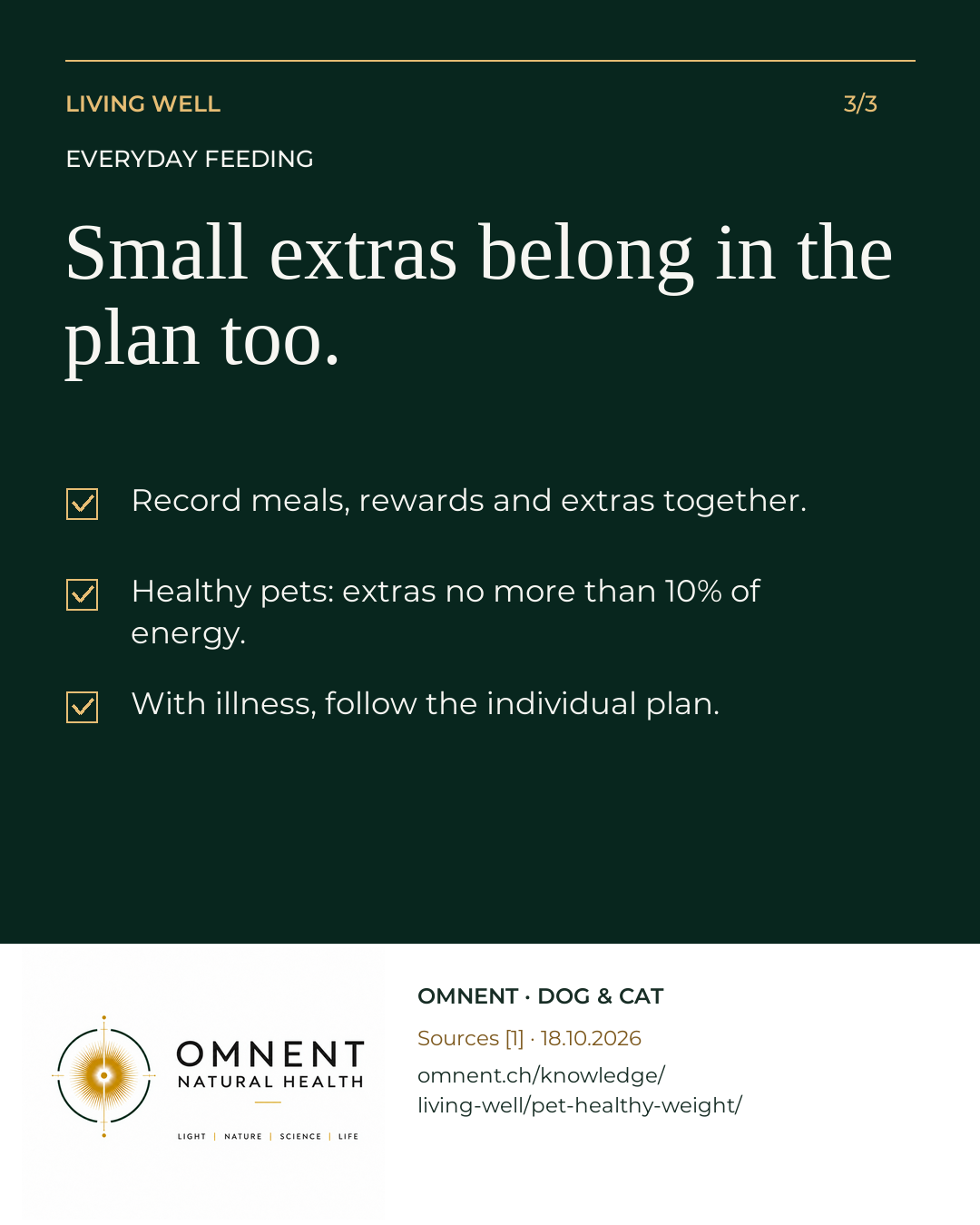
For healthy pets at an appropriate weight, AAHA recommends no more than 10% of energy from extras; the remainder from complete, balanced food. This means calories, not grams. Illness may require different instructions. [1]
As preparation, make a shared list with everyone who feeds the animal. Record what actually goes into the bowl and what is added elsewhere. The purpose is neither to tidy up the story nor to blame anyone. Small habits are easier to discuss once they are visible.
- Note the food name, amount offered and leftovers; bring packaging or photographs to the appointment.
- Include training rewards, chews, table scraps and food used to give medication.
- Agree who prepares the daily portion and how any additional food will be recorded.
The plan belongs to the individual
AAHA recommends individual weight programmes with follow-up. Substantial food restriction may compromise nutrient intake. [1]
Ask the practice for a plan that your household can actually follow: which food? What weighed amount? Which extras are included? When is the review? Who can answer questions? A written starting point makes later adjustments easier to understand.
There is deliberately no universal calorie allowance or weekly target here for every dog and cat. The studies below describe particular groups under supervision. Their averages are not targets for your pet. Growth, existing illness or altered food intake belong in the individual consultation.
What clinical studies show
These studies concern animals with excess weight, sometimes with an existing disease. They inform supervised weight programmes. They do not show that an animal at an appropriate weight becomes healthier through further weight loss, or that one ingredient explains an observed benefit.
Marshall and colleagues followed 14 dogs with obesity and osteoarthritis in an open, 16-week weight-loss study.
Dogs with osteoarthritis: everyday mobility
Finding. Lameness assessments improved alongside weight reduction; objective gait measurements also showed improvement.
Interpretation & limitations. The study was small and lacked a randomised control group. It concerns dogs with disease and does not demonstrate a general effect in all dogs. The observed weight change is not an individual target prescription.
Original source [6] ↗German and colleagues enrolled 50 dogs with obesity; 30 completed the weight programme. Owners assessed quality of life using a questionnaire.
Dogs: quality of life as an outcome
Finding. Among successful completers, vitality and ratings of pain and emotional disturbance improved. Anxiety did not change significantly.
Interpretation & limitations. There was no blinded, randomised comparison. Owner expectations and selection of completers may influence the results. The study concerned a whole programme, not an isolated product promise.
Original source [8] ↗Flanagan and colleagues enrolled 730 cats at 188 practices in 22 countries; 413 completed the programme with full data.
Cats: findings across many practices
Finding. Of those 413 cats, 402 lost weight. Average reduction was 10.6% over a median of 13 weeks.
Interpretation & limitations. An uncontrolled cohort with substantial incomplete follow-up and involvement of the diet manufacturer. These figures describe completers, not success among all starters, and are not a safe target for every cat.
Original source [7] ↗Movement should remain comfortable
The AAHA pain guideline includes weight management, movement and rehabilitation in care. Large controlled veterinary trials remain lacking for many exercise interventions. Activity should be tailored when pain is present; human findings cannot simply be transferred to animals. [10]
For an older dog or one in pain, “more” is therefore not enough as an instruction. Discuss suitable, tolerable activity and notice changes in gait and behaviour. New lameness needs assessment, rather than an attempt to overcome it through extra training. [10]
A review of feline feeding describes food provision as part of environmental care: suitable feeding locations, arrangements for multiple cats and accessible enrichment. Difficulty and access need to suit the animal. A food puzzle is an opportunity, not a reason to make a cat struggle for food. [5]
As a practical trial, offer an easy, accessible food-search task using part of the planned ration and observe whether the cat wants to engage. Interest, withdrawal or frustration provide useful feedback for the next adjustment. [5]
Delgado and colleagues offered 17 neutered indoor cats both a puzzle and freely available food across ten trials.
Food puzzles do not guarantee an outcome
Finding. Overall, cats ate more from the freely available food; some used the puzzle more. Preferences differed between individuals.
Interpretation & limitations. This small behaviour study did not test weight loss. It establishes neither that puzzles are useless nor that they reliably burn calories. Offering choice is more reasonable than expecting the same response from every cat.
Original source [9] ↗Not eating is a warning sign in cats
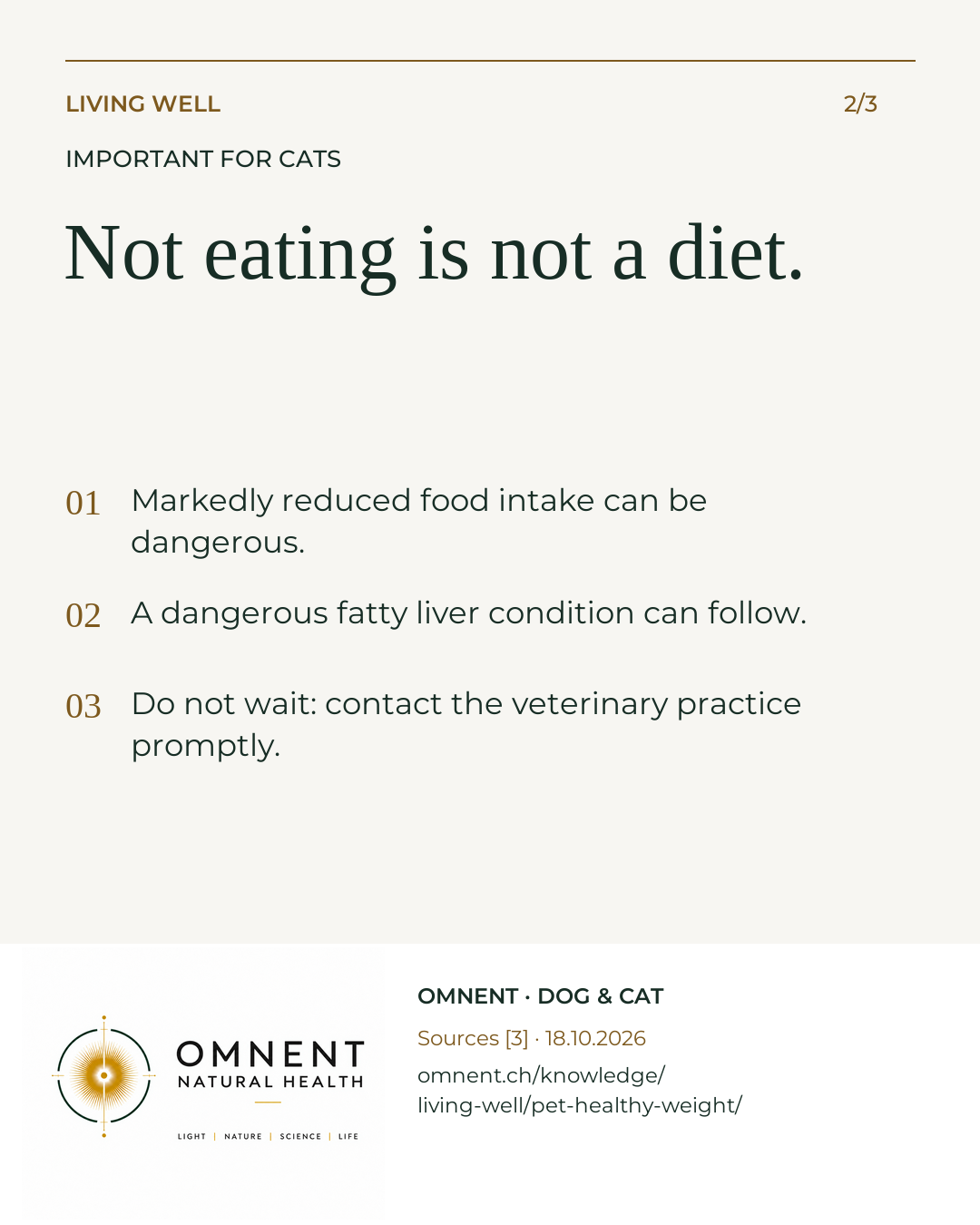
Hepatic lipidosis is a serious fatty liver disease, often following markedly reduced food intake, particularly in cats with excess weight. Fasting is not a suitable diet. If your cat stops eating or eats markedly less, contact the veterinary practice promptly. [3]
Loss of appetite can have many causes, including pain, dental problems or other illnesses. Cornell emphasises veterinary investigation of the cause. Weight loss because a cat is not eating is not automatically a success of its feeding plan. [4]
For the call, specific information helps: when did eating change? What was offered and what remained? Was the food changed, or did anything else change? Do not wait to contact the practice until the next weigh-in shows whether a desired number has been reached. [4]
Review progress together
A simple page with dates, agreed portions, actual food intake and observations can support the conversation. Note practical difficulties too: different feeding times, for example, or an option the animal rejected.
Bring questions to the review. How will the practice judge progress? What should stay the same until next time? Which change requires an earlier call? This turns general guidance into a shared agreement that can be reviewed.
If a plan is hard to follow, discuss adjustments. Shame helps neither animals nor their carers. The purpose here is attention: to food, movement, wellbeing and a routine that works for your household.
A CLOSER LOOK
Is that really true?
“Just halve every pet’s portion.”+
A blanket reduction is not a plan.
Energy needs and nutrient adequacy must fit together. [1]
“A cat can fast to lose weight.”+
No: not eating can become dangerous.
Markedly reduced food intake can precede hepatic lipidosis. Discuss it with a vet promptly. [3]
START SMALL
Three steps towards a useful start
- 01
Record current feeding, all extras and observations from everyone caring for the animal.
- 02
Arrange assessment of fat reserves and muscle. [2]
- 03
Ask for one manageable first step, a review date and clear reasons to call earlier.